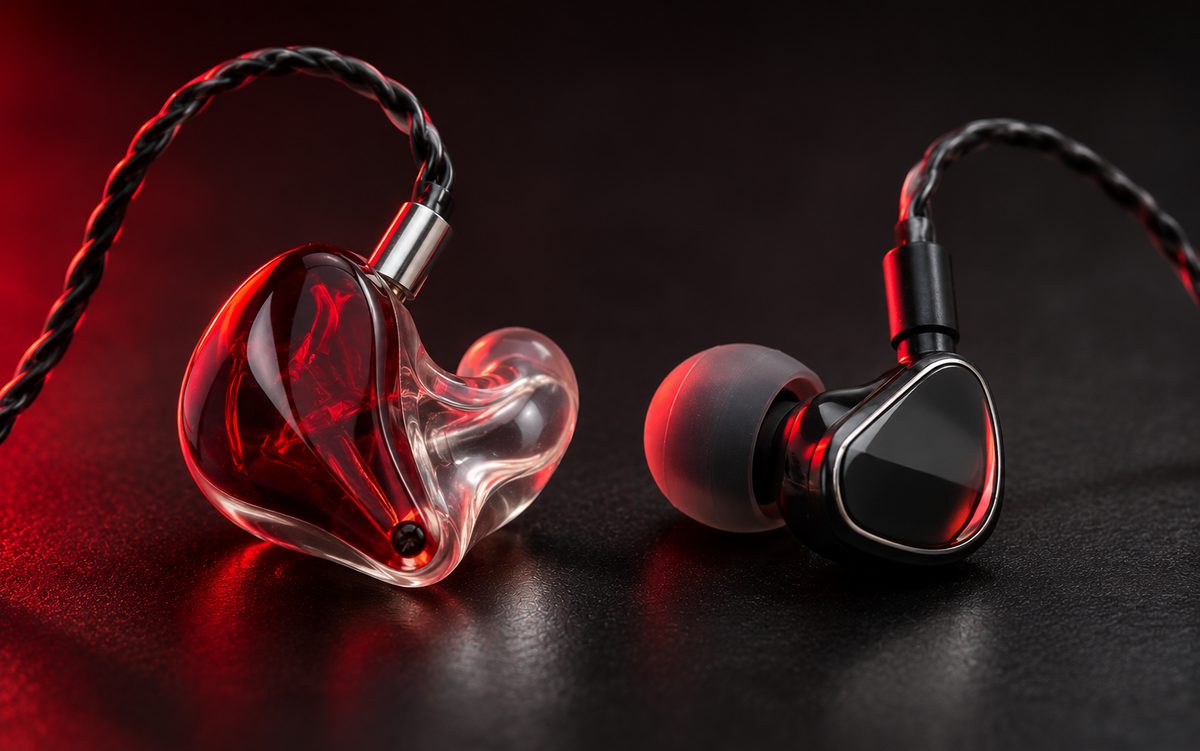
Balanced armature vs dynamic drivers in live monitoring
Why pro in-ear monitors have two, six or ten drivers, how balanced armatures differ from dynamic drivers, and what more drivers actually get you on stage.
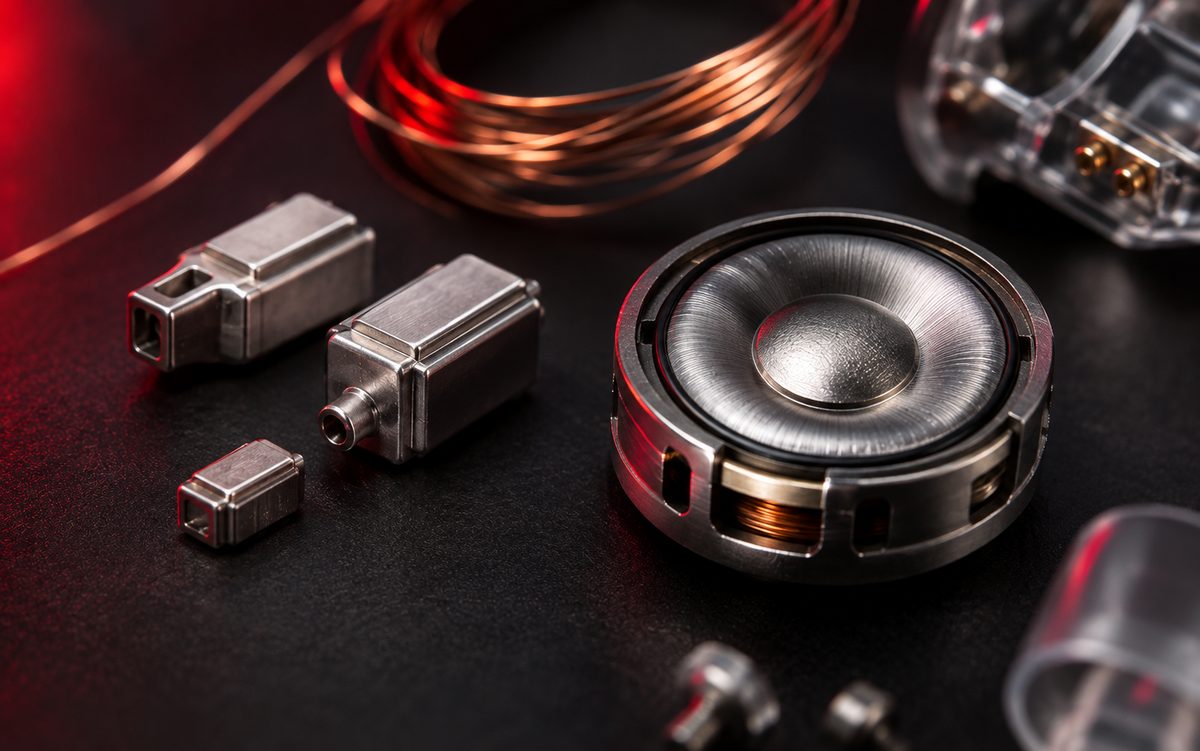
Look at any range of professional in-ear monitors and the first number you see is the driver count: 2, 4, 8, 10. Drivers are the tiny speakers inside the shell. Here is what kind they are, why there are several, and how to choose.
Two kinds of driver
Dynamic drivers work like a miniature loudspeaker: a thin diaphragm attached to a voice coil moves back and forth in a magnetic field. One dynamic driver can cover the whole audible range and is known for a full, natural low end. It needs a little more space, and keeping it controlled at the very top and bottom of the range is harder.
Balanced armature (BA) drivers were developed for hearing aids. A tiny reed (the armature) balanced between magnets moves a small diaphragm. They are very small, very efficient and very precise, which makes them good at detail and fast transients. Each one sounds best over a limited range, so BA monitors usually combine several, each assigned to part of the spectrum.
Some monitors (“hybrids”) mix the two: a dynamic driver for bass and BAs above it.
Why several drivers?
In a multi-driver monitor, a crossover splits the signal so each driver only plays the frequencies it handles best: some drivers for lows, some for mids, some for highs. A “3-way” design has three such groups. Splitting the work this way means:
- Less strain at high volume. Each driver works within its comfort zone, so the sound stays clean when the mix gets loud.
- More separation. Vocals, guitars, keys and click are easier to pick apart because they aren’t all coming from one driver.
- Tuning control. The builder can shape bass, mids and treble more independently, which is how a model can be tuned for drummers, singers or engineers.
Does more always mean better?
No. More drivers give the designer more control, but a well-tuned 2-driver monitor can suit a vocalist better than a poorly matched 8-driver one. What matters on stage is:
- Your role. Drummers and bassists benefit from controlled low end; vocalists want clear, forward mids; engineers mixing front-of-house want a flat, revealing reference.
- Your mix. Busy mixes with lots of sources benefit from the separation of higher driver counts.
- The seal. No driver count fixes a poor fit. A good seal (see custom or universal) does more for bass and isolation than any extra driver.
How the Soundz range lines up
The Soundz monitors we carry use balanced-armature drivers, from the 2-driver Soul (the entry into professional monitoring, with extra low end and warmth) through the Future, Blade and Dune, to the 8-driver Dream and Flame and the 10-driver flagship Avant. Each model page lists its driver count, its tuning and who it’s built for.
Browse Soundz in-ear monitorsEvery model, its driver count and current prices in CAD.GO →Want a recommendation? Take the 4-question IEM finder or ask us.